Join us for our annual fall teaching symposium to consider “what works” and what matters most in a time of cascading trials. How do we foster intrinsic motivation, agency, and belonging in the current context?
This year's What Works event will give you the opportunity to explore teaching practices and ideas that have had an impact on inclusion and belonging. Hear and share inspiring stories, and leave with resources and new ideas for building community and belonging, removing barriers to learning, and fostering shared agency in the classroom.
What You Will Explore
The event will focus on three themes:
Building community and belonging: What are strategies to create a learning climate that feels genuinely welcoming?
Motivation and agency: How can we encourage students to take an active role in their learning?
Inclusive design and Universal Design for Learning: What design solutions can we imagine to better support all students across a range of needs?
What to Expect
Our hope is that seasoned instructors will find support and inspiration and that those new to considering inclusion will find new and simple “ways in” to inclusive teaching practices, attuned to the many strengths, experiences, levels of preparation, and challenges that students bring.
Our goal is for event participants to leave feeling committed and encouraged, having a sense of our teaching community as values-driven, resilient, and mutually supportive, with 1-2 new ideas to try in their teaching.
Event Schedule
Three faculty members will share stories from their teaching that reveal method, heart, trial, and learning in alignment with the symposium themes. Participants will be invited to connect, explore, engage with CTI resources, and consider their own teaching. We’ll also celebrate this year’s Canvas Course Spotlight award winners.
1:30 p.m. | Building Community and Belonging
What are strategies to create a learning climate that feels genuinely welcoming?
Marianella Casasola, Professor and Senior Associate Dean for Undergraduate Affairs, College of Human Ecology
2:00 p.m. | Motivation and Agency
How can we encourage students to take an active role in their learning?
Sara Warner, Associate Professor of Performing and Media Arts, College of Arts & Sciences
2:50 p.m. | Canvas Course Spotlight Award Ceremony What actually helps students succeed in Canvas? Launched in 2025, the Canvas Course Spotlight program was created as a direct outlet for students to share "what works" for their learning and spotlight the course design choices that make a genuine impact.
3:00 p.m. | Inclusive Design and Universal Design for Learning
What design solutions can we imagine to better support all students across a range of needs?
Alexandra Coso Strong, Director, Duffield Engineering Education Research Institute, and Associate Professor at the R.F. Smith School of Chemical and Biomolecular Engineering, College of Engineering Landon Schnabel, Associate Professor, Sociology, College of Arts & Sciences
Meet the Presenters
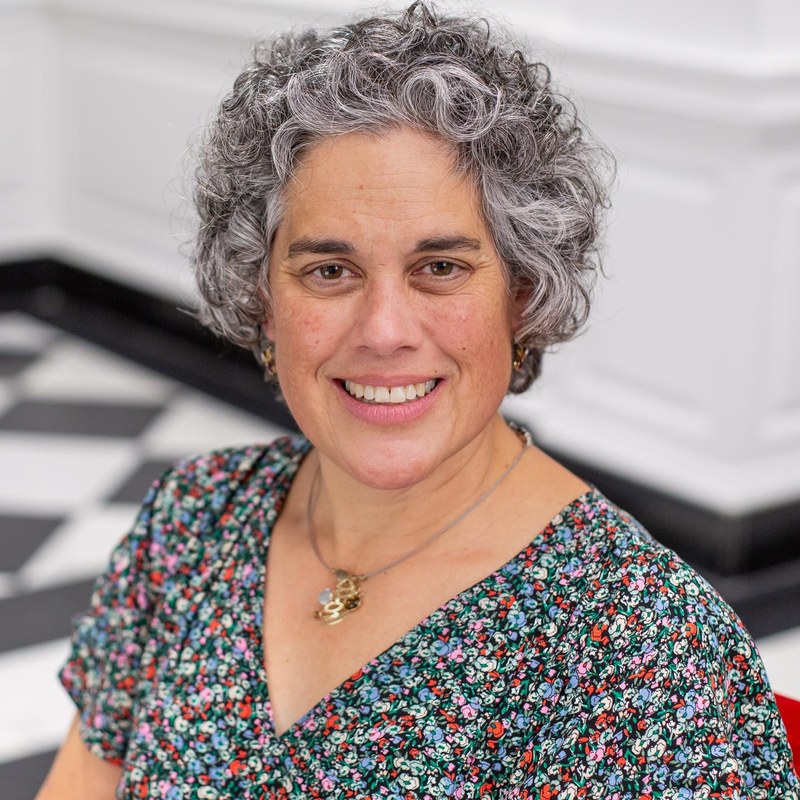
Marianella Casasola
Senior Associate Dean for Undergraduate Affairs Professor
Psychology, Cornell Human Ecology
Read bio
Marianella earned her undergraduate degrees in psychology and Spanish literature from the University of California, Berkeley and her Ph.D. in psychology from the University of Texas at Austin. Her expertise is in infant cognitive development and early word learning with a particular interest in the interaction between language and thought during the first years of development.
Along with her students, she examines various aspects of early cognitive and linguistic development, but is especially interested in the emergence of spatial concepts, the early acquisition of spatial language, and the interplay between spatial cognition and spatial language in infants and young children.
In her courses, she strives to help students develop their writing and critical thinking. For students who are undergraduate research assistants in her lab, she strives to instill a sense of excitement for the process of discovery and encourage students to use their creativity in tackling a research question.
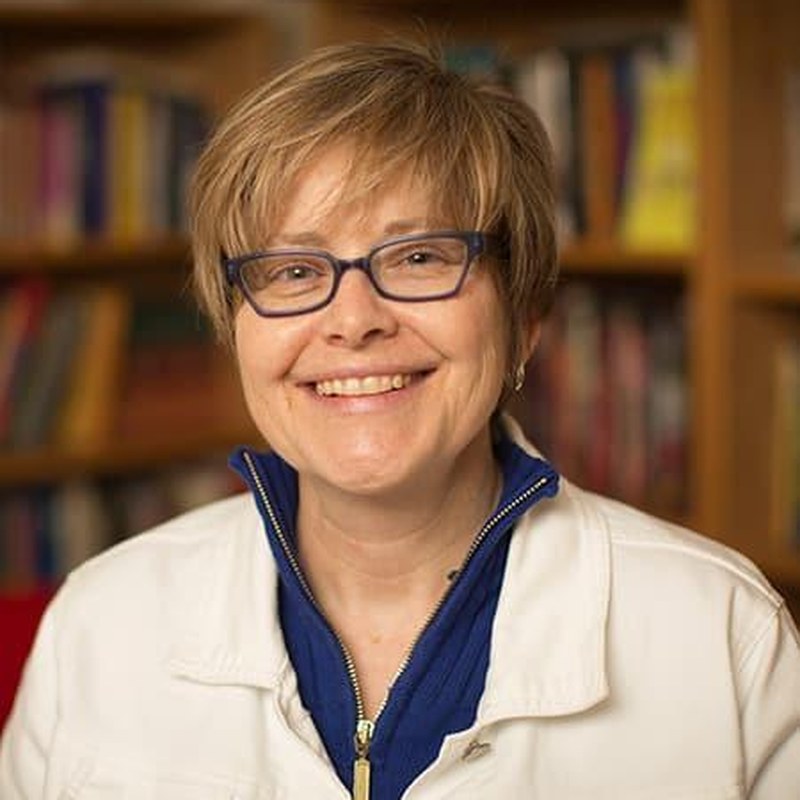
Sara Warner
Associate Professor
Performing & Media Arts, College of Arts & Sciences
Read bio
Sara earned her Ph.D. from Rutgers in comparative literature. The current director of Cornell's LGBT Studies Program, Sara is an affiliate faculty member in the Feminist, Gender, and Sexual Studies Program, American Studies, and Visual Studies. Her book, Acts of Gaiety: LGBT Performance and the Politics of Pleasure (University of Michigan Press 2012), received the Outstanding Book Award from the Association of Theater in Higher Education (ATHE), an honorable mention for the Barnard Hewitt Award from the American Society for Theatre Research (ASTR), and was named a Lambda Literary Award finalist. Her current book, Queering the Canon: Lorraine Hansberry’s Lesbian Plays, is under consideration by the University of Michigan Press. Sara has published widely in journals and anthologies on theater and performance studies, queer aesthetics, second wave feminism, politics, prisons, and academic labor.
In 2016, Sara was named a Stephen H. Weiss Junior Fellow, Cornell's highest teaching award for a recently tenured faculty member. She has been a Mellon Foundation Fellow and an Engaged Faculty Fellow, creating public works, including community-based plays about climate change and political protests on national holidays.
Sara studies the art of activism. In her research, she attempts to articulate, through close readings of dramatic literature and live performances, archival research, and theoretical reflection, a series of questions concerning bodies and the modes of attachment that bind them into various forms of publics and counterpublics.
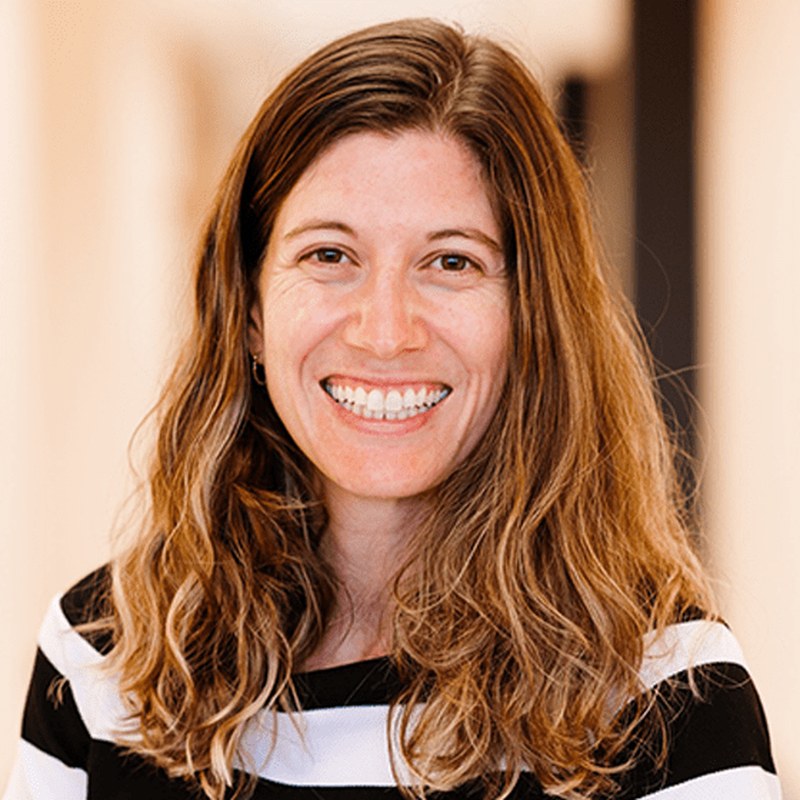
Alexandra Coso Strong
Director, Duffield Engineering Education Research Institute Associate Professor
R.F. Smith School of Chemical and Biomolecular Engineering Systems Engineering Program, Cornell Duffield College of Engineering
Read bio
Alexandra works and teaches at the intersection of engineering education, faculty development, and complex systems design. She joined Cornell University in 2024 after co-founding the School of Universal Computing, Construction and Engineering Education at Florida International University. Alexandra completed her doctorate in aerospace engineering at Georgia Tech and earned a bachelor’s degree in aerospace engineering from MIT and a master’s degree in systems engineering from the University of Virginia. Alexandra continued her educational and professional journey as a postdoctoral fellow at Georgia Tech’s Center for the Enhancement of Teaching and Learning and a faculty member at Olin College of Engineering in Massachusetts (2015-2018).
Grounded in the growing complexity of ongoing global challenges, Alexandra’s research focuses on identifying and developing approaches to (a) sustainable change with the systems we inhabit and interact with and (b) how we, as educators, can prepare the next generation of engineers and change agents to develop solutions to these challenges. Alexandra earned an NSF CAREER Award in 2023 to identify, learn from, and amplify the stories of educators who have developed transformational curricular designs while facing barriers that have impeded change in other contexts. She currently serves a co-editor for Studies in Engineering Education (2026-Present).
Alexandra has extensive experience teaching design and systems analysis courses at the undergraduate-level (e.g., human-centered design, educational systems design, modeling and simulation, quantitative engineering analysis, senior design). At the graduate-level, her teaching has focused on education research methods and pedagogy.
Landon Schnabel
Associate Professor
Sociology, College of Arts & Sciences
Read bio
Landon studies inequality, how it changes over time, and why it persists through social change in the United States and around the world. Most of their research focuses on gender inequality alongside other dimensions of social inequality including sexual orientation, race, ethnicity, and class.
Unequal social relations and structures can be maintained through force or ideological legitimation. Landon focuses on legitimation. More precisely, he examines factors such as religion that ostensibly compensate for inequality—by providing social, psychological, and/or material benefits to subordinated groups—but can paradoxically end up legitimating and reinforcing it. Although legitimation is his focus, he takes a broad view of the study of inequality and social change, examining various factors that limit or facilitate opportunity, well-being, and intergroup relations.
Landon’s forthcoming book, Is Faith Feminine? What Americans Really Think about Gender and Religion, considers the ways religions are gender-typed, the implications of gendered social psychological incentives and expectations, and how religion suppresses gender differences in politics. Landon’s work has received awards from several sections of the American Sociological Association and other organizations. In 2026 Landon was the recipient of the Morgan Chia-Wen Sze and Bobbi Josephine Hernandez Distinguished Teaching Prize from the College of Arts & Sciences for excellence in teaching and advising. For more information about Landon’s research and publications, please see his personal website.