
Teaching Innovation Case Study Library
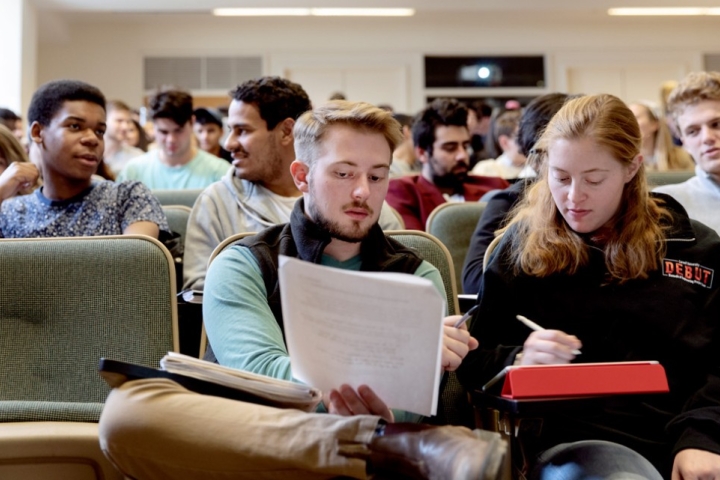
Welcome to the Teaching Innovation Case Study Library, a curated collection of real-world examples showcasing creative, evidence-based approaches to teaching and learning at Cornell. With insights from Creative Teaching Award winners, Provost’s Working Group for Innovation in Assessment faculty fellows, Cornell colleagues finding “What Works” for engaged learning experiences, and more, these adaptable case studies are intended to provide ideas and methodologies for different courses and learning environments.
Whether you want to find new strategies for assessment or active learning, ideas for how to tackle the rise of generative AI, or just browse new-to-you perspectives and pedagogical approaches, we hope you'll find inspiration here.
We look forward to expanding on this library’s offerings in future semesters, and invite you to check back for updates. And if you adapt any of the case studies for your course(s), we hope you'll tell us about your experience!
Active & Collaborative Learning
Explore case studies engaging with methods such as peer discussion, problem-solving, and collaborative activities to help students process new material, practice concepts, and connect for deeper learning.
- Awe-Walks and Sensory Savoring Routes: Ithaca’s Natural Landscapes as a Living Laboratory for a Course in Psychological Well-Being from Anthony Ong, Professor of Psychology, College of Human Ecology.
- Collective Discovery: Group Problem-Solving Using Student-Generated Data from Melissa Smith, Statistics & Data Science, Cornell Ann S. Bowers College of Computing & Information Science.
- Group Project Accountability in Retail Buying and Merchandising Course from Jaleesa Reed, Human Centered Design, College of Human Ecology.
- Experiencing Food Systems Firsthand with On-Campus and Local Field Trips from Kathryn Fiorella, Associate Professor, Public and Ecosystem Health, College of Veterinary Medicine.
- From Classroom to Field: Students Drive Real‑World Farm Innovation from Marvin Pritts, Professor, School of Integrated Plant Science, College of Agriculture and Life Sciences,
- From Theory to Table: A Capstone Experience in Food Service Management from Emily Wilcox Gier, Nutritional Science, College of Human Ecology.
- Students Turn Theory into Practice with Reading Group Guides for Middle School Youth from Misha Ailsworth, Assistant Professor, Psychology, College of Human Ecology and College of Arts & Sciences.
- Using Art to Build Community and Nurture Relationships in the Patient-Physician Dynamics from Peggy Leung, Assistant Professor of Medicine, and Andrea Card, Assistant Professor of Clinical Medicine, Division of General Internal Medicine, Weill Cornell Medicine.
Explore our additional resources on active and collaborative learning.
Assessing Student Learning
From the Provost's Working Group on Innovation faculty fellows, Creative Teaching Award winners, and more, explore approaches to assessment that promote meaningful feedback, measure learning effectively, and support student growth beyond traditional exams.
- Using Oral Exams to Motivate and Assess Learning from Ungraded Homework in Engineering, from Chris Schaffer, Biomedical Engineering, Cornell Duffield College of Engineering.
- Engaging the Community: An Applied Approach to Digital Storytelling in Dietetics from Kelly Quinn, Nutritional Sciences, College of Human Ecology.
- Fostering Student Inquiry: A Scaffolded Approach to Developing Research Skills in Viticulture and Enology from Kathleen Arnink, Food Science, and Ria D'Aversa, Viticulture, College of Agriculture & Life Sciences.
- From Theory to Table: A Capstone Experience in Food Service Management from Emily Wilcox Gier, Nutritional Science, College of Human Ecology.
- Game-Inspired Self-Graded Assessments: A Case Study in Real Estate Financial Modeling from Daniel Lebret, Peter and Stephanie Nolan School of Hotel Administration, SC Johnson College of Business.
- Group Project Accountability in Retail Buying and Merchandising Course from Jaleesa Reed, Human Centered Design, College of Human Ecology.
- Group Quizzes and Exams: Alternative Assessments One Small Step at a Time from Anne Bracy, Electrical and Computer Engineering, Cornell Duffield College of Engineering.
- Mastery-Based Grading in Chemical Engineering: A Holistic Approach from Rong Yang, R.F. Smith School of Chemical and Biomolecular Engineering, College of Engineering.
- Oral Assessments to Reinforce and Evaluate Student Learning: A Case Study in Fluid Mechanics from Brian Kirby, Sibley School of Mechanical and Aerospace Engineering, Cornell Duffield College of Engineering.
- Spanish Language Students Showcase Creativity and Cultural Competencies at Zine Fest from Silvia Amigo-Silvestre, and Emilia Illana Mahiques, Romance Studies, College of Arts & Sciences.
- Supporting Student Well-Being with Peer-Led Study Groups from Linda Nicholson, Molecular Biology and Genetics, College of Agriculture & Life Sciences.
- “Ungrading” A Communication Course Using Feedback, Critical Reflections, and a Portfolio from Tyrell Stewart-Harris, Nolan School of Hotel Administration, Dyson School of Applied Economics and Management, Cornell SC Johnson College of Business.
- Using Labor-Based Grading and Reflections to Develop Students' Writing Skills from Kate Navickas, John S. Knight Institute for Writing in the Disciplines, College of Arts & Sciences.
- Using Low-Stakes Assessments to Improve Teaching: A Case Study in Micro- and Macroeconomics from George Orlov and Doug McKee, Economics, College of Arts & Sciences.
Explore our additional resources on assessing student learning.
Engaging Students
From participants in “What Works: Creating Engaging Learning Experiences,” and more, find creative strategies for engaging students through collaborative problem-solving, digital storytelling and virtual reality, real-world applications, and inquiry-based learning across diverse disciplines.
- Awe-Walks and Sensory Savoring Routes: Ithaca’s Natural Landscapes as a Living Laboratory for a Course in Psychological Well-Being from Anthony Ong, Professor of Psychology, College of Human Ecology.
- Collective Discovery: Group Problem-Solving Using Student-Generated Data from Melissa Smith, Statistics & Data Science, Cornell Ann S. Bowers College of Computing & Information Science.
- Constructive Learning through Peer Review and Feedback Literacy from Brian Richards, Biological & Environmental Engineering, College of Agriculture & Life Sciences.
- Culturally Immersive Field Trips to Japan with Virtual Reality from Naomi Larson, Asian Studies, College of Arts & Sciences.
- Engaging the Community: An Applied Approach to Digital Storytelling in Dietetics from Kelly Quinn, Nutritional Sciences, College of Human Ecology.
- Experiencing Food Systems Firsthand with On-Campus and Local Field Trips from Kathryn Fiorella, Associate Professor, Public and Ecosystem Health, College of Veterinary Medicine.
- From Classroom to Field: Students Drive Real‑World Farm Innovation from Marvin Pritts, Professor, School of Integrated Plant Science, College of Agriculture and Life Sciences,
- From Theory to Table: A Capstone Experience in Food Service Management from Emily Wilcox Gier, Nutritional Science, College of Human Ecology.
- Fostering Student Inquiry: A Scaffolded Approach to Developing Research Skills in Viticulture and Enology from Kathleen Arnink, Food Science, and Ria D'Aversa, Viticulture, College of Agriculture & Life Sciences.
- Group Project Accountability in Retail Buying and Merchandising Course from Jaleesa Reed, Human Centered Design, College of Human Ecology.
Explore our additional resources on engaging students.
Generative AI & Teaching
From the Creative Teaching Award winners and more, explore how faculty are addressing the emergence of generative AI in ways that emphasize academic integrity, foster student competencies, and create opportunities for thoughtful, ethical engagement with the technology.
- AI Literacy Instruction in First-Year Writing Courses from Tracy Carrick, John S. Knight Institute for Writing Disciplines, College of Arts and Sciences.
- Building AI Literacy through Visualizing Innovative Textile Projects from Juan Hinestroza, Fiber Science and Apparel Design, College of Human Ecology.
- Color-coding Strategy to Improve Student Written Argumentation from Amie Patchen, Public and Ecosystem Health, College of Veterinary Medicine.
- Exploring AI Image Generation for Landscape Architecture Designs from Jennifer Birkeland, Landscape Architecture, College of Agriculture and Life Sciences.
- Writing about Controversies in American Politics: Using AI to Examine Counterarguments and Definitions from Peter Katzenstein, Government, College of Arts and Sciences.
Explore our additional resources on generative AI and teaching.
Inclusion & Accessibility
From Creative Teaching Award winners and more, explore case studies that highlight inclusive teaching practices and accessible learning strategies designed to support equity, belonging, and success for all students at Cornell.
- Spanish Language Students Showcase Creativity and Cultural Competencies at Zine Fest from Silvia Amigo-Silvestre and Emilia Illana Mahiques, Romance Studies, College of Arts & Sciences.
- Using Art to Build Community and Nurture Relationships in the Patient-Physician Dynamics from Peggy Leung, Assistant Professor of Medicine, and Andrea Card, Assistant Professor of Clinical Medicine, Division of General Internal Medicine, Weill Cornell Medicine.
Explore our additional resources on inclusion and accessibility.